
The Earliest Americans
History Articles

When it comes to the Native American history in North America, it begins well before the arrival of the Europeans. Estimates show that the earliest inhabitants on the continent go back as far as 17,000 years. Historians have divided this into four eras, the Paleo, Archaic, Woodland, and Mississippian. Each of these eras had its distinctions and built upon the cultures and practices of the ones that preceded it. So, let’s take a deep dive into each of them…
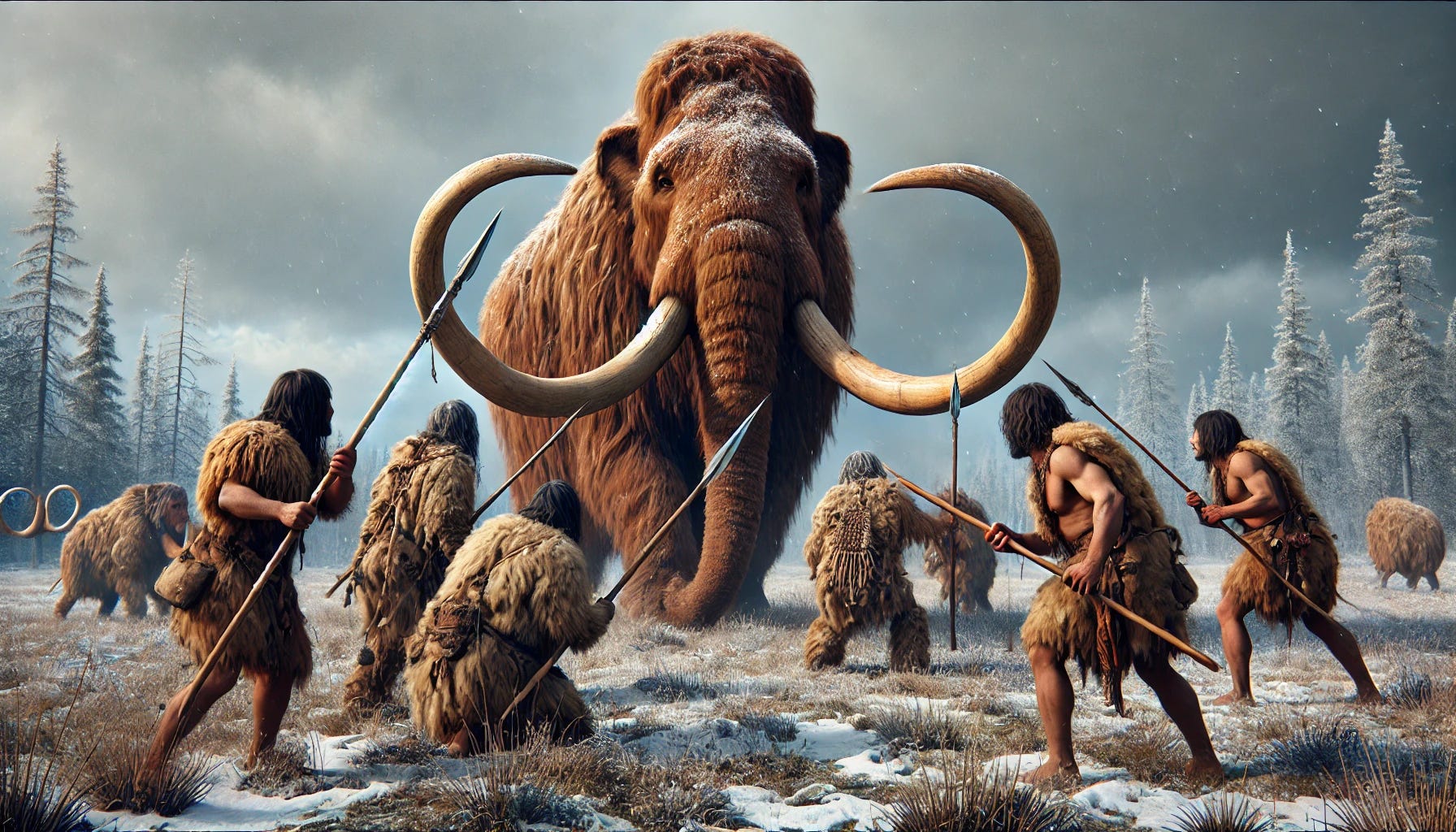
The Paleo-era lasted from 11,000 BC to 8,001 BC. They coincided with the Ice Age with them traveling to North America from Asia on the land bridge. This was a frozen over section of ocean between present-day Russia and Alaska. Given that, the Paleo were a very nomadic people, living in temporary shelters and camps rather than set structures. When it came to food, they were large game hunters, which included Ice Age mammals such as the mammoth. Their tools consisted of those made of stone and early spears.
The Archaic-era lasted from 8,000 BC to 1,001 BC. They were the ones that began to take up farming as the Ice Age had ended. While they continued to hunt, the large Ice Age mammals were gone so they relied on small to medium size game. The hunting tools included the atlatl, which was a spear with a greater force and distance than those used by their ancestors. Given the reliance on farming, they established villages with permanent structures. Over time, the peoples of this era learned how to store crops over long periods which gave them more leisure time.
The Woodland-era lasted from 1,000 BC to 900 AD. This is when we began to first see the bow and arrow which revolutionized hunting. Farming practices continued to evolve with corn being the preferred crop. Corn could be eaten, stored, and even used as bait in hunting for game like deer. Pottery played a major part in this era, not just for practical purposes, but for cultural symbolism. Each pot would be carved with a distinctive design. The artist would use chords, sharp tools, and wooden paddles to craft the design and build a durable product. Even today, archaeologists continue to unearth pottery from this time period.
The final of the early Natives, lived during the Mississippian-era which lasted from 901 AD to 1500 AD. This era saw the construction of massive villages and structures such as the Etowah Indian mounds near present-day Cartersville, GA. Farming was their staple of living with new practices taken up such as “hilling.” This is where dirt was stacked around the stalk to avoid water drainage. The crops of choice were squash, corn, and beans which they referred to as the “three sisters.” The Mississippians placed huge emphasis on community life with many sports and ballgames constantly taking place.
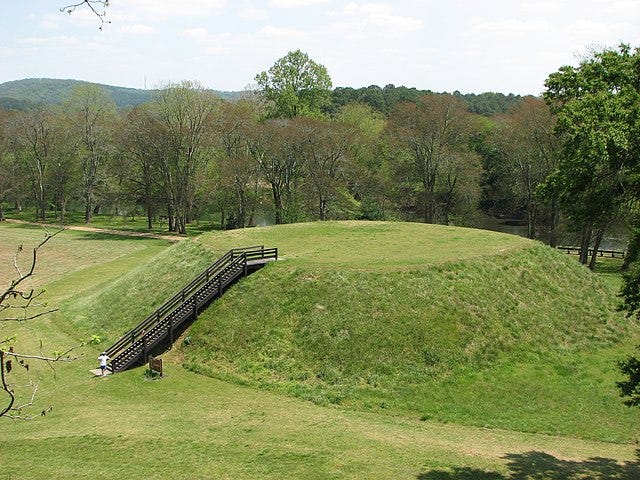
The end of the Mississippian-era coincided around the time the first Europeans arrived, which led to its own problems. Each tribe of Native Americans had their own cultures, customs, and traditions. They worshipped their own Gods like we do today. There are places all over that preserve the legacy of our ancient ancestors. The Etowah Mounds are now a state historic site where visitors can climb the very mounds that the Natives built and lived on centuries before. Cherokee, NC is showcases visitors all the customs and traditions of the Cherokee people. That includes the Museum of the Cherokee Indian which is the source of the content in this article. Doing the research on this has given me a deep respect for the Native Americans.
If you support my work, please take the chance to subscribe. For $10 a month, you can help me in my mission to keep our history alive. I post every Monday morning to give you something interesting to help start off your week, but I cannot do this without your help. God Bless!